
There are many types and formats of immunoassays. Some immunoassays require multiple steps while some involve simply mixing the reagents and the analyte and then making a measurement.
Steps:
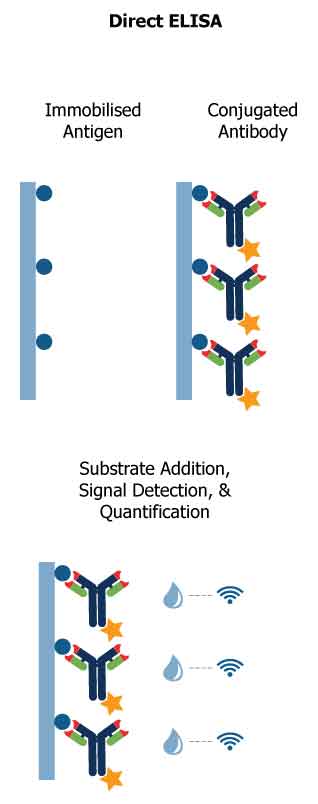
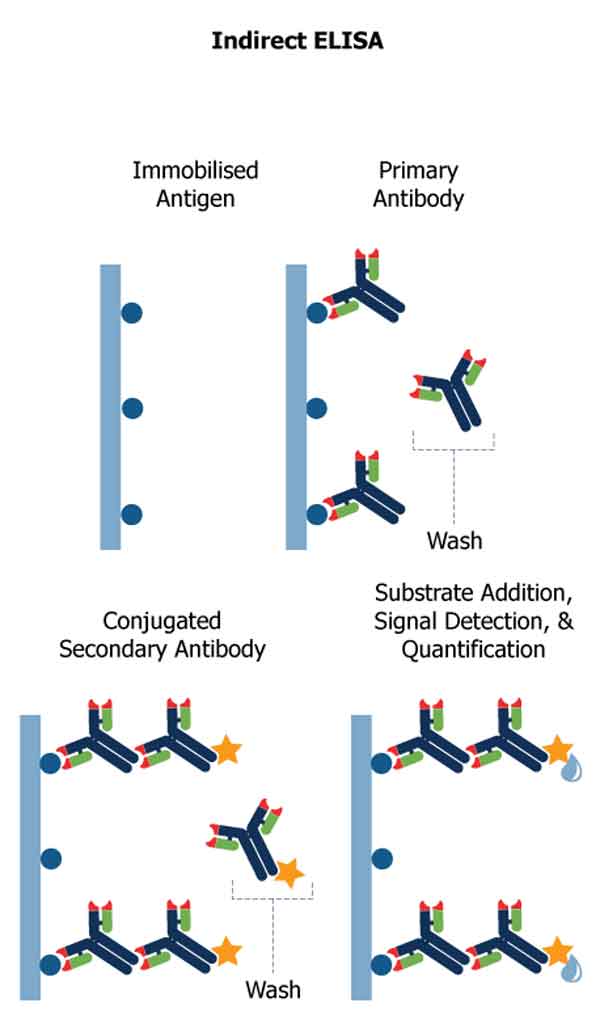
Addition of the primary antibody with an attached enzyme is added which binds to the test antigen coating the well.
Steps:
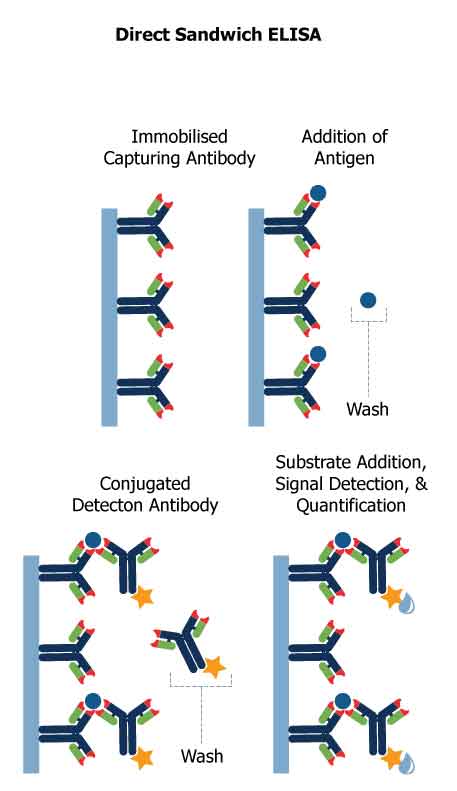
Addition of another antibody known as specific antibody and its binding to antigen.
Washing of the plate to remove the unbound antibody-enzyme conjugates.
Measurement of absorbance/fluorescence/electrochemical signal to determine the occurrence/concentration of antigen.
Steps:
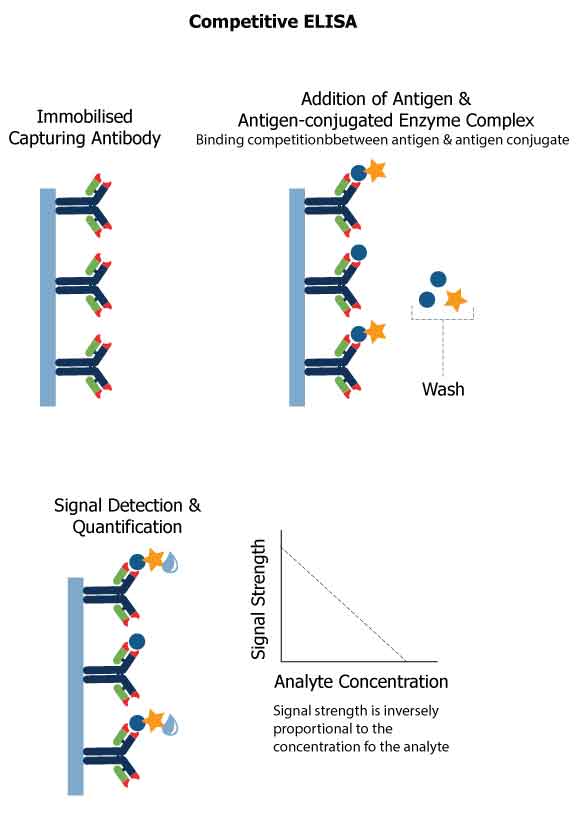
Washing of the plate to remove unbound antibodies.
Addition of substrate and eliciting a chromogenic or fluorescent signal by the remaining enzymes.
Steps:
Passing of the sample through the scavenger container which can either be a test tube or a specifically designed flow through channel whose surface has antigens called Scavenger antigens attached to it.
It provides a measurement of the amount of both antigen as well as antibody.
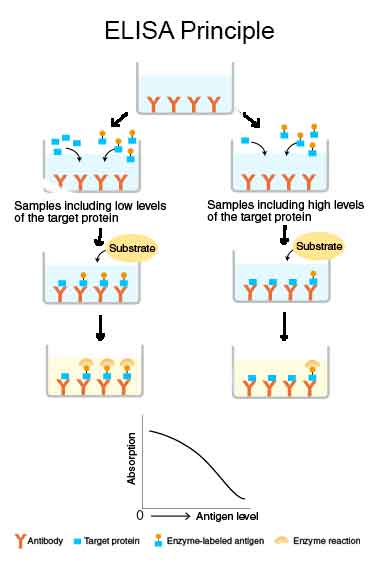
In the food industry, it is used for detecting likely allergens such as milk, nuts, etc.
It is also used in toxicology for a quick, preliminary screening of drugs of certain classes.
This immunoassay technique albeit extremely sensitive, specific and requiring specialised equipment is one of the least expensive techniques to check the levels of antigens in the blood.
Mixing the radiolabelled antigen with a known quantity of antibody specific for the antigen and the later specific binding of the antigen and the antibody to each other.
Increase of the amount of unlabelled antigen and the subsequent displacement and separation of bound and unbound antigens.
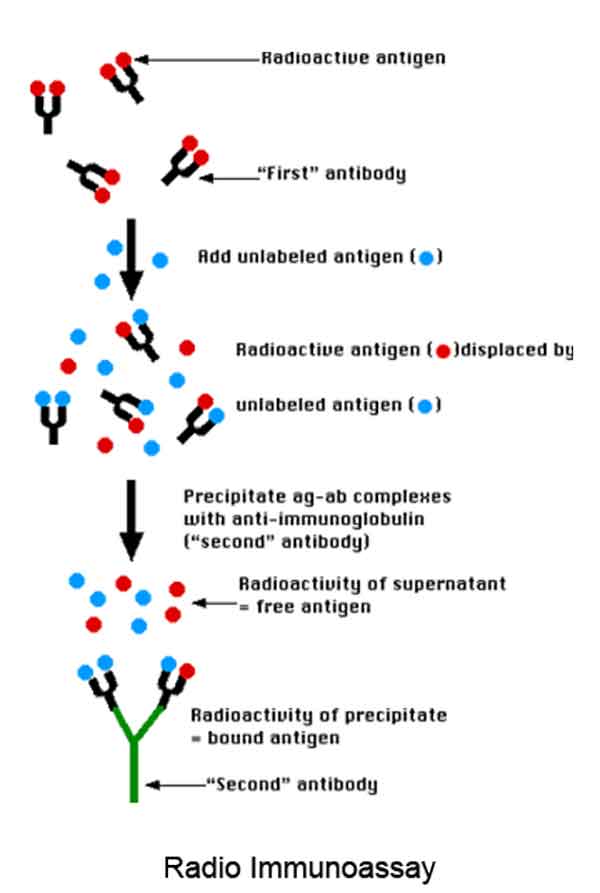
Drugs like hydromorphone and hydrocodone that are used in combination with antitussive and analgesic-antipyretic mixture can be detected in the plasma using RIA.
RIA is used in the differentiation between iron deficiency and the inability of the body to use iron by measuring the levels of ferritin in the serum.
It is also used in determination of a patient’s thyroid status and also to check the effectiveness of I-131 doses after I-131 treatment in patients.
It was first introduced by Miles and Hales in 1968.
Attachment of the radioactively labelled antibodies to the unbound epitopes of the antigen and the subsequent formation of the antigen-antibody complex after addition of a sample having the desired analyte.
Measurement of the concentration of the remaining radioactively labelled antibodies using a gamma counter.
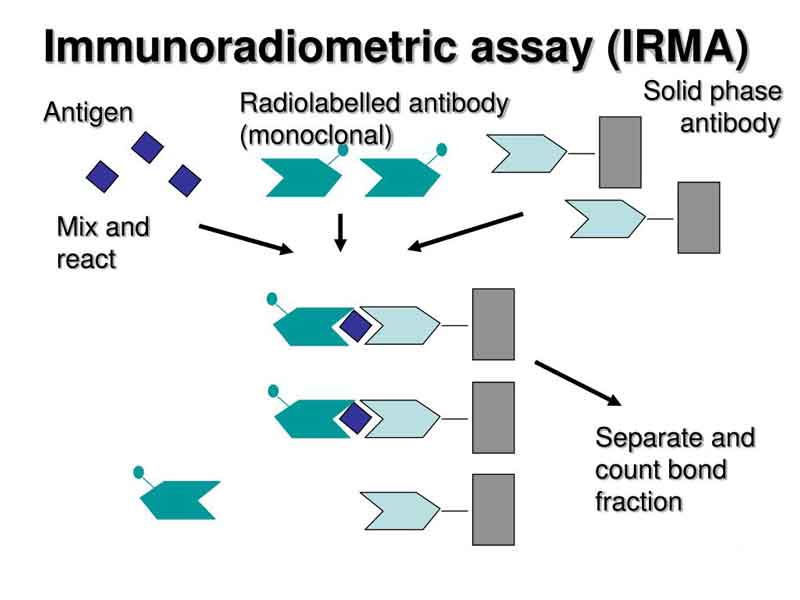
It is also used to measure the concentration of HCG (Human Chorionic Gonadotropin) during early pregnancy.
Two site IRMA is used for the detection of Plasmodium falciparum antigen in the blood, thus helping in the diagnosis of malaria.