
sancharFirst Logo
  • Electrophoresis
  • Agarose Gel Electrophoresis

    • Electrophoresis is the movement of particles under the influence of a uniform electric field.
    • It is used in laboratories to separate molecules based on their size.
    • There are 2 major types of electrophoresis viz. Zone Electrophoresis and Moving Boundary Electrophoresis.
    • One of the types of electrophoresis in zone electrophoresis is gel electrophoresis.
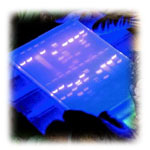
    • Gel electrophoresis is a method of separating large molecules based on their size and charge.
    • It is used to separate proteins by charge and/or size and to separate DNA and RNA fragments and to estimate their size.
    • One of the examples of gel electrophoresis is Agarose Gel Electrophoresis (AGE).
    • It is a method of gel electrophoresis which is used to separate a population of large molecules such as DNA or proteins where the matrix is agarose, which is one of the components of agar.

    • Principle:
    • Agarose gel contains pores which can’t be seen with the naked eye and these pores act as molecular sieves.
    • These sieving properties affect the rate at which a molecule migrates.
    • Smaller the size of a molecule, the faster it migrates.
    • Other factors such as shape of the molecule (more compact or less compact), charge on the molecule along with buffer conditions, voltage, gel concentrations, etc. affect the movement of molecules in the gel.
    • Instrumentation:
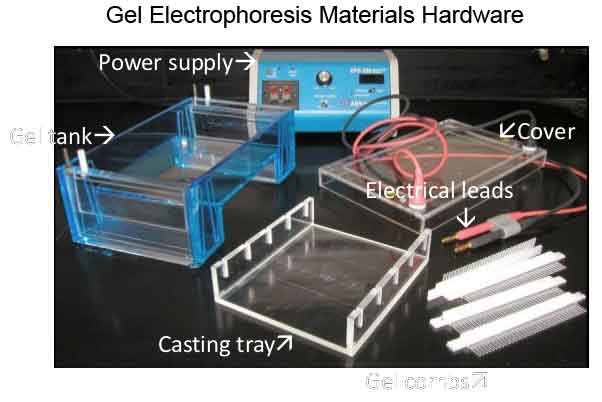
    • The components of agarose gel electrophoresis are:
    • Agarose gel:
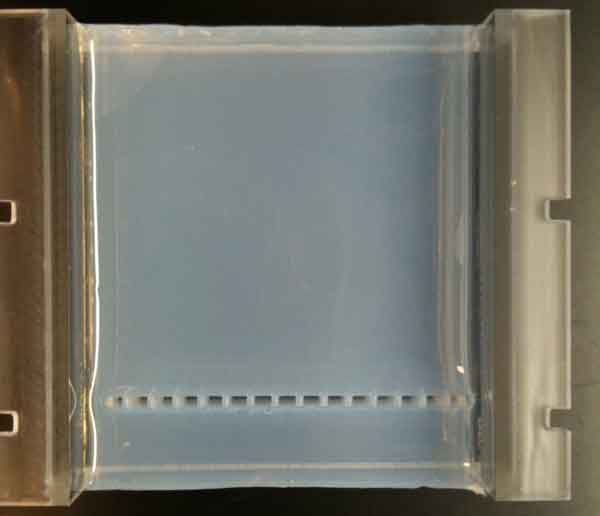
    • This gel is prepared by dissolving agarose powder in a boiling buffer solution.
    • Early


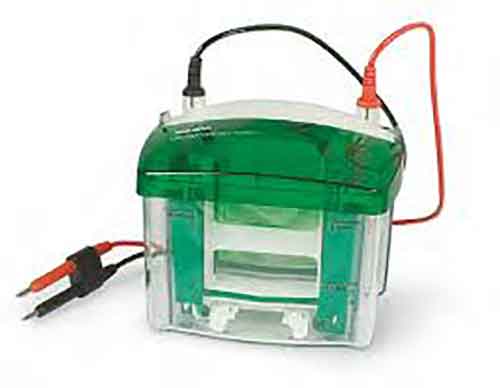
      Electrophoresis apparatus:
      Early

    • This is filled with buffer and it also contains electrodes.

    • Direct current power supply:
    • A DC power supply is connected to the electrophoresis apparatus and the current is applied which helps in migration of the sample.

    • Applications:
    • Estimation of the size of DNA molecules after their digestion with restriction enzyme.
    • Analysis of the PCR products for e.g. in the fields of molecular genetic diagnosis or genetic fingerprinting.

    • Separating DNA fragments for their extraction and purification.
    • Separation of restricted genomic DNA/RNA before Northern/Southern Blot.
    • Separation of proteins in the field of clinical chemistry where proteins are screened for abnormalities.
  • Polyacrylamide Gel Electrophoresis (PAGE)
    • Another example of a gel electrophoresis technique is the Polyacrylamide Gel Electrophoresis (PAGE).
    • It is also used to separate large molecules like nucleic acids and proteins.
    • The matrix for this technique, unlike agarose gel electrophoresis is polyacrylamide, which is a polymer of acrylamide.
    • Acrylamide is formed by the hydration of acrylonitrile using an enzyme called nitrile hydratase.
    • Acrylamide when dissolved in water polymerizes to form polyacrylamide.
    • If the molecules are run on the gel in their original/native state then the technique is called native PAGE.
    • However, if a denaturant (most commonly sodium dodecyl sulphate (SDS)) is used to convert the structured molecule into an unstructured one, this technique is called SDS-PAGE.

    • Principle:
    • When proteins are separated by electrophoresis through a gel matrix, smaller proteins move faster as there is less resistance to their movement from the gel matrix.
    • Other factors that influence the rate of movement of a protein through the gel matrix are its structure and the charge it has.
    • However, the influence of structure and charge is largely removed by the use of sodium dodecyl sulphate (SDS) and polyacrylamide gel in SDS-PAGE. Therefore, the proteins are separated only on the basis of the length of the polypeptide chain.
    • Instrumentation:
    • The components of PAGE are similar to Agarose Gel Electrophoresis (AGE) except the fact that the gel is composed of polyacrylamide instead of agarose.


    • Applications:
    • Analysis of post-translational modifications (PTMs) of proteins.
    • Sample preparation of proteins prior to their mass spectrometry.

    • Determination of molecular mass of a protein.
    • SDS-PAGE is used as a part of the HIV test to separate HIV proteins before their detection with Western Blot.

    • SDS-PAGE is also used to evaluate proteinuria i.e. levels of proteins in the urine.

  • Go to the top of the page

    Go to Main Menu