sancharFirst Logo
  • Chromatographic Techniques
  • Theoretical Plates and HETP
      Principle
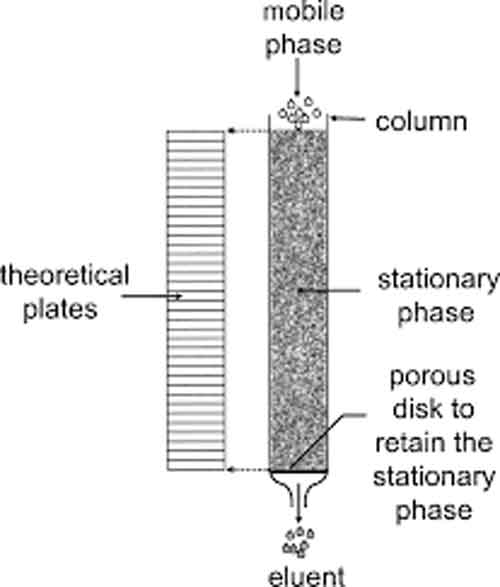
    • Column chromatography is based upon the assumption that the entire solid phase in the column is divided into a number of plates. Such plates are called the theoretical plates as these plates don’t actually exist.
    • The efficiency of separation of components of an analyte is dependent upon many factors like the particle size, the pressure applied, etc.
    • It is the ratio of the column length to the number of theoretical plates in the column.

      HETP= L/N

      Where,

      L= Column length

      N= Number of Theoretical Plates


  • Van Deemter Equation
      Principle
    • HETP is also calculated with the help of the Van Deemter Equation.
    • The Van Deemter equation also provides certain parameters which affect the speed of separation.
    • The equation is as follows:
    • HETP= A+ B/u + (Cs+ Cm). u

      Where

      A= Eddy Diffusion

      B= Longitudinal Diffusion

      Cs = Mass transfer in stationary phase

      Cm = Mass transfer in mobile phase

      u = Linear velocity in m/s
  • High Performance Liquid Chromatography/ High Pressure Liquid Chromatography
      a) Principle
    • HPLC is based on the interaction of the compounds (present in the mobile phase) across the immobile solid stationary phase.
    • The components bind at specific regions of the stationary phase based on their chemical and physical properties. These molecules are then removed with a suitable buffer and are collected with time.
    • The high pressure and the high flow is created due to the high pressure pump and the small particle size of the column.

    • b) Instrumentation
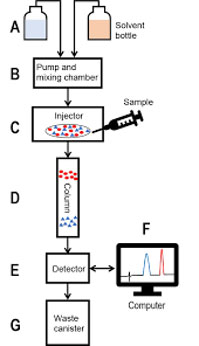
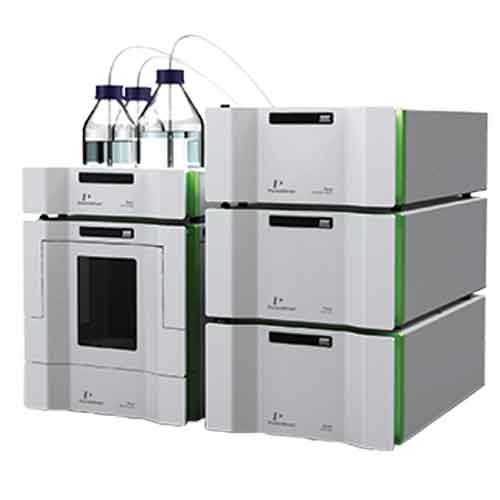
    • HPLC consists of the following components:

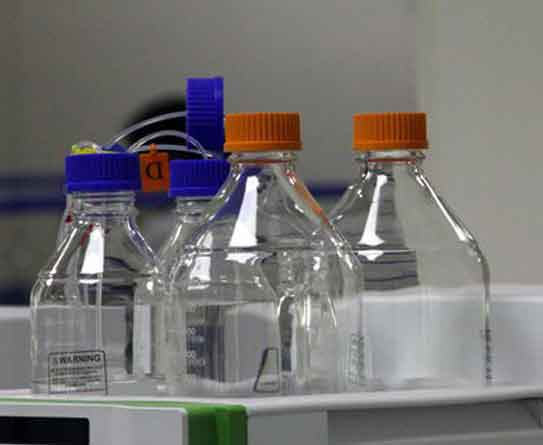
    • Solvent Reservoir


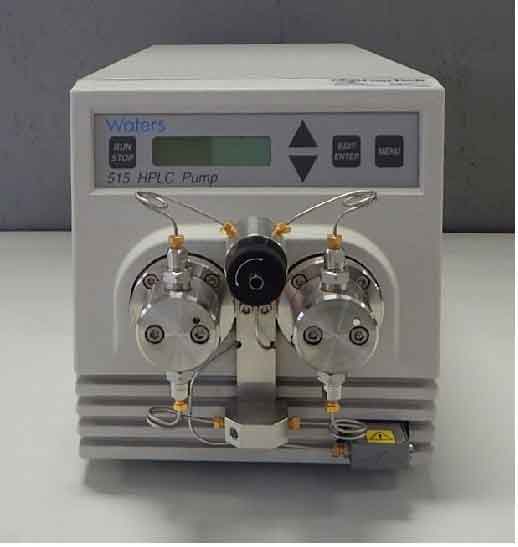
    • High Pressure Pump


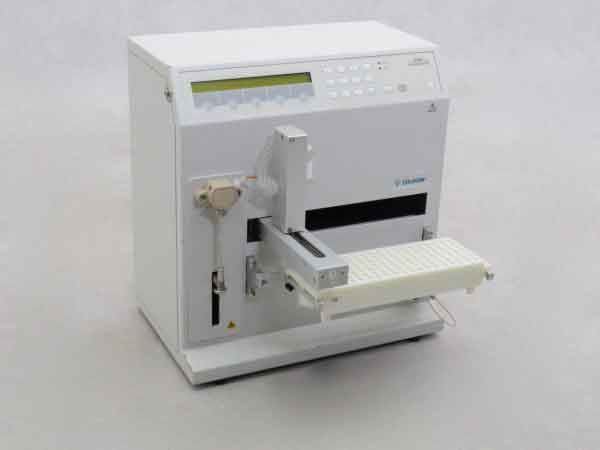
    • Auto-injector


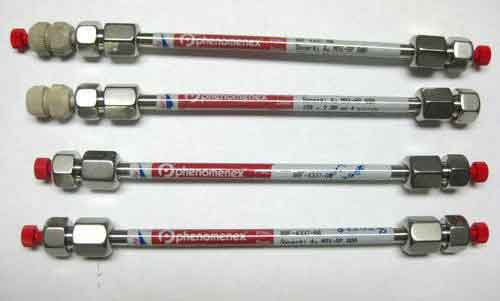
    • Column


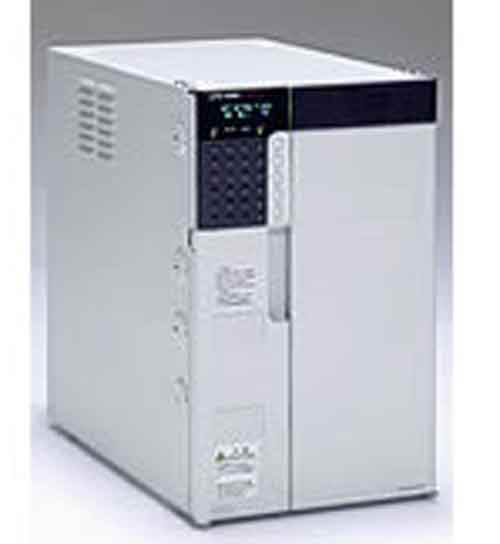
    • Column Oven (may not always be present)


    • Detector
    • Output device


      HPLC Instrumentation


      c) Applications
    • Qualitative Analysis
    • Quantitative Analysis
    • Analysis of pesticides, pharmaceutical products, etc.
  • Gas Chromatography
      a) Principle
    • Gas chromatography is based upon the difference in the affinities of the components of the analyte towards the stationary phase (liquid adsorbed on a solid) and the mobile phase (gas).
    • The volatile, therefore, gaseous components being analyzed interact with the column walls, thus giving rise to difference in the time of elution/ retention time.

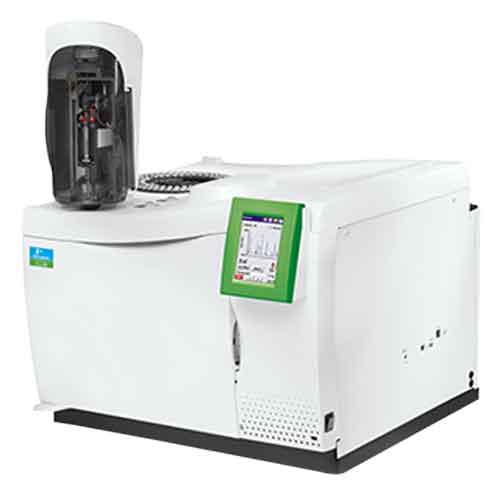
    • b) Instrumentation:
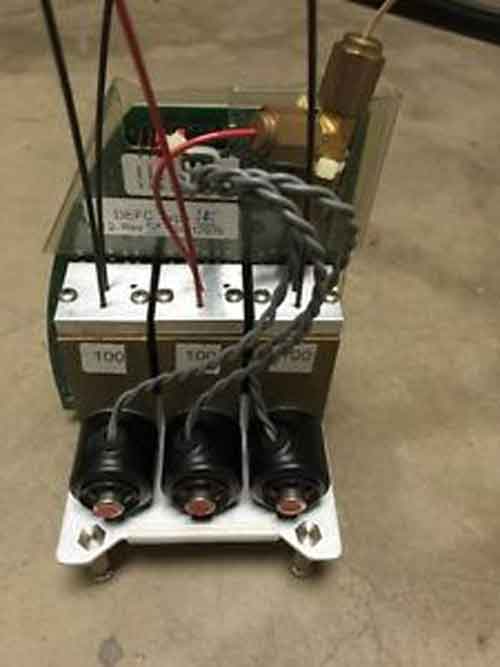
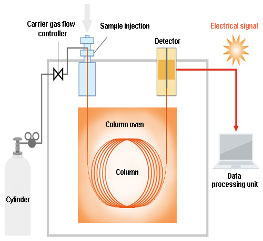
    • 1. Carrier gas cylinder:
    • Provides the carrier gas/mobile phase.

    • 2. Flow controller:
    • Controls the flow of the gas.


    • 3. Autosamplers/ Inlets/Injectors:-
    • Act as portals for the entry of the analyte.
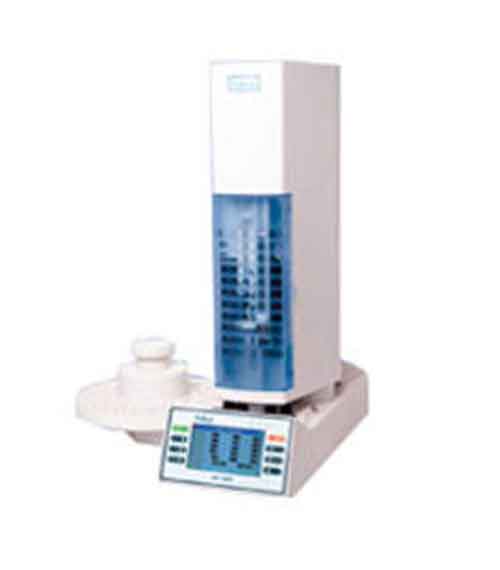


    • 4. Column:
    • Acts as the stationary phase thus helping in separation.

      Contained in a column oven.
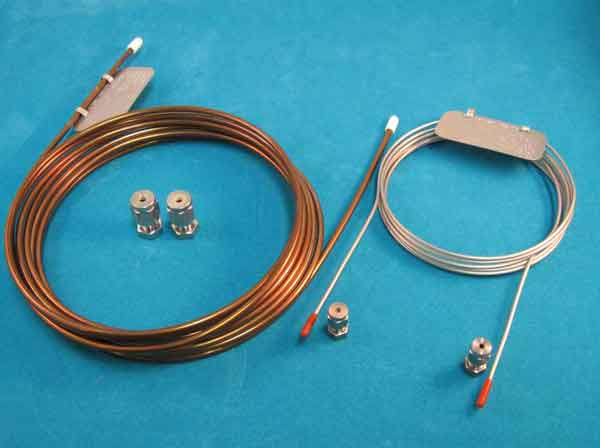


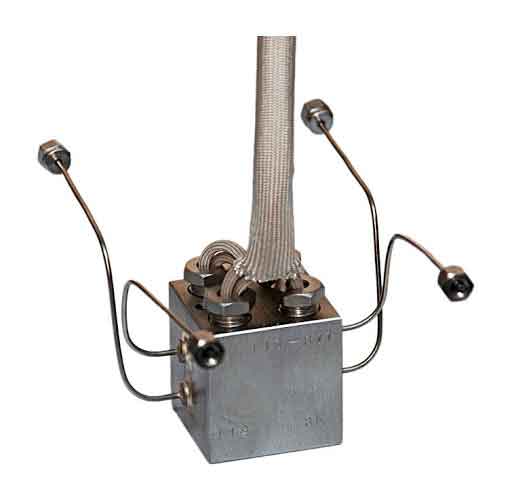
    • 5. Detector:
    • Converts the chemical signal into an electrical signal.

      They are of many types depending upon the analyte.


    • 6. Output device:
    • Provides the output in the form of a chromatogram.


      c) Applications:

      1) Qualitative Analysis

      2) Quantitative Analysis

      3) Analysis of oils, perfumes, etc.

      4) Environmental monitoring

      5) Forensics

  • Thin Layer Chromatography
      a) Principle
    • Thin Layer Chromatography is based upon the differential adsorption and the affinity of the components of the analyte towards the stationary phase (solid, polar in normal phase, non-polar in reverse phase) and the mobile phase (liquid, non-polar in normal phase, polar in reverse phase)
    • The solvent/mobile phase rises up with the help of capillary action taking the components of the analyte along with it depending on the affinity of the components.

    • b) Instrumentation:

      TLC makes use of the following components:

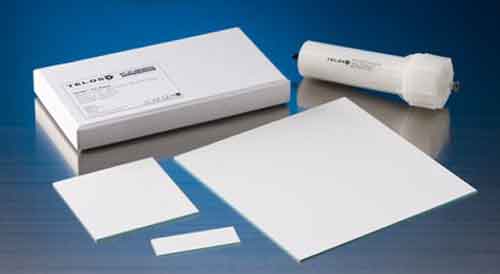
    • 1) TLC plates:
    • - Act as stationary phase.

      - Aluminium or glass plates with adsorbent coated on them.


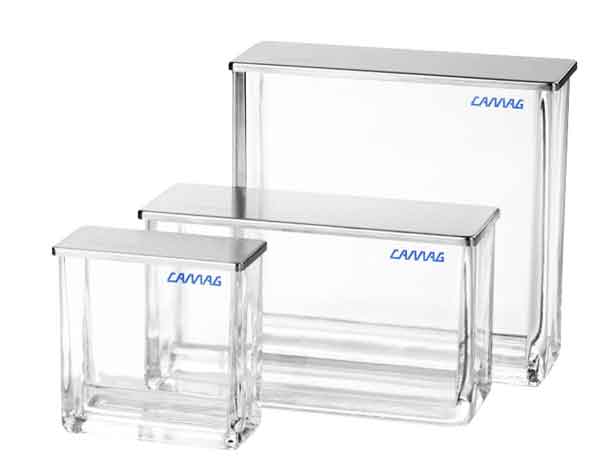
    • 2) Saturation chamber/tank:
    • - It is a twin trough chamber in which the mobile phase/solvent is poured.

      - Generally, a 10x10 chamber is used, although 20x20 chamber may also be used.


    • 3) Glass capillary:-
    • - It is an extremely thin glass tube which is used to load the analyte onto the plate.

    • 4) Derivatizing agent:
    • - If the components are colourless or are not visible under UV light, a derivatizing agent or a chemical is used to convert them into coloured components.


      c) Applications:
    • Qualitative Analysis
    • Quality control- TLC Fingerprinting
    • Semi quantitative analysis
    • Purity analysis
  • High Performance Thin Layer Chromatography
      a) Principle
    • HPTLC is an enhanced form of TLC, hence the principle of separation remains same as that of TLC.
    • However, the high performance comes from the following factors:
    • 1) Automation

      2) Software control

      3) Reproducible chromatograms


      b) Instrumentation:
    • HPTLC comprises of the following components:
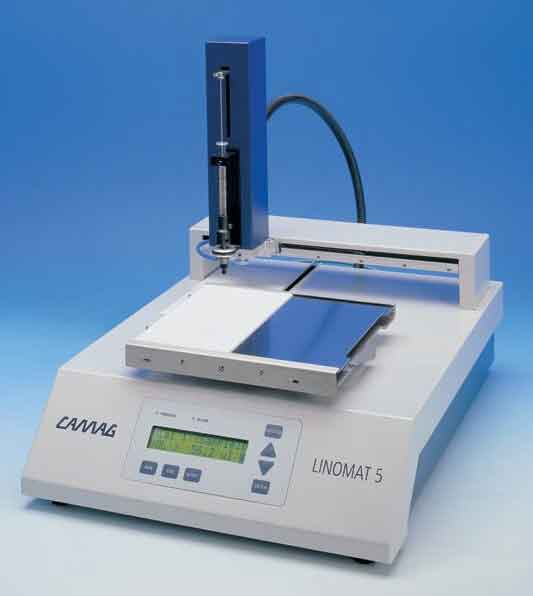
    • 1) LINOMAT 5 Applicator:
    • Used to apply the analyte sample to the TLC plate.


    • 2) Developing Chamber:
    • It is a twin trough chamber in which the mobile phase/solvent is poured.

      Generally, a 10x10 chamber is used, although 20x20 chamber may also be used.


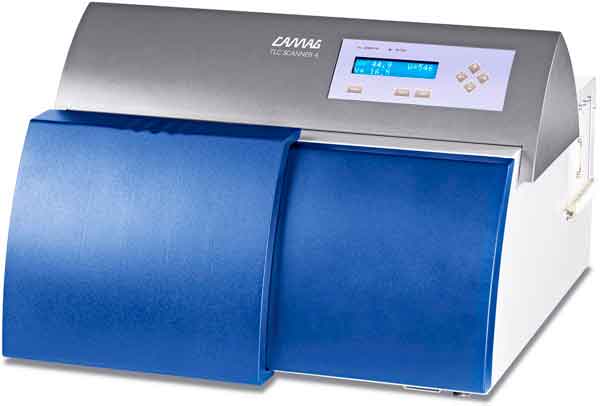
    • 3) CAMAG Scanner:-
    • It is used to scan the plate at all wavelengths and hence develop a chromatogram.


      c) Applications:
    • Qualitative Analysis
    • Environmental samples testing
    • Quality Control of Herbal Drugs-HPTLC Fingerprinting
    • Pesticide Residue Analysis
    • Forensics
    • Quality control, Stability and Purity checks in pharmaceuticals
    • Metabolism Studies, Lipid profile, etc.
    • Colouring substances and preservatives in cosmetics

  • Go to the top of the page

    Go to Main Menu